
It’s a fair question, and plenty of small business owners ask it. If your Instagram is busy, your Facebook page has followers, and customers are messaging you directly, why spend money on a website at all? Social media is free, familiar, and where your audience already spends its time.
The short version: yes, you still need a website, and social media makes that more true rather than less. Social platforms are excellent for reach and engagement, but they’re rented ground you don’t control, and they can’t do several things a website does. In 2026, the businesses that win treat social media and a website as partners, not alternatives. This guide explains exactly why, and how to make the two work together.
Social Media and a Website Do Different Jobs
The mistake is thinking of them as competing options. They’re not. They solve different problems.
Social media is brilliant at the top of the journey. It builds awareness, shows personality, and keeps you in front of people who already follow you. A website is where interest turns into action. It’s where a potential customer goes to check you’re legitimate, understand what you offer, and actually buy or enquire. One creates attention. The other converts it. That conversion job is exactly what our web design service is built around.
Relying on social media alone is like renting a stall at a busy market with no shop of your own. Great for footfall, but you’re always at the mercy of the market’s rules.
Five Things Social Media Can’t Do For Your Business
1. You don’t own it
This is the big one. Your social media accounts belong to the platform, not to you. Algorithms change, reach drops overnight, accounts get suspended by mistake, and platforms can decline in popularity. If your entire online presence sits on rented ground, you’re one policy change away from losing your audience. A website is an asset you own outright.
2. It limits how customers find you
People actively searching for a service usually turn to a search engine, not a social feed. If you have no website, you simply don’t appear when someone searches for what you offer. That’s a huge stream of ready-to-buy customers missed, and it’s why a website paired with digital marketing and SEO captures demand that social media never reaches.
3. It can’t sell properly on its own
Social platforms have added shopping features, but they’re limited and take a cut. For anything beyond the simplest sales, you need proper product pages, a secure checkout, and control over the buying experience. A dedicated ecommerce store gives you that, along with the flexibility to run your shop the way you want.
4. It struggles to build deep trust
A social profile shows highlights. A website tells the full story: your services, your process, real case studies, detailed answers to customer questions, and clear contact information. When someone is deciding whether to spend money with you, that depth matters. Showing genuine proof of your work, as we do across our portfolio of client projects, reassures people in a way a feed of posts can’t.
5. It doesn’t look fully professional on its own
A business with no website can seem smaller or less established than it is. For many customers, a professional website is the baseline expectation of a serious business. Its absence quietly raises doubt, even if your social media is excellent.
Why AI search makes a website even more important
Here’s a shift worth understanding. More customers now ask AI tools such as ChatGPT, Gemini, and Google’s AI results to recommend businesses. These systems read and cite websites, not social feeds. If you have no website, you’re effectively invisible to this fast-growing way of searching.
In other words, the case for a website is getting stronger, not weaker. As people increasingly ask AI to find them a supplier, the businesses with clear, credible websites are the ones that get recommended. Social media alone leaves you out of that conversation entirely.
How social media and a website work best together
The real power comes from using them as a team. Each does what it’s good at, and they feed each other.
- Social media drives discovery. Use it to build an audience, show your personality, and stay visible.
- Your website converts that interest. Send followers to your site to enquire, book, or buy, where you control the experience.
- Your website feeds your social media. Blog posts, new projects, and updates give you genuine content to share, rather than scrambling for something to post.
- Both build trust together. A consistent, professional presence across both reassures customers wherever they first find you.
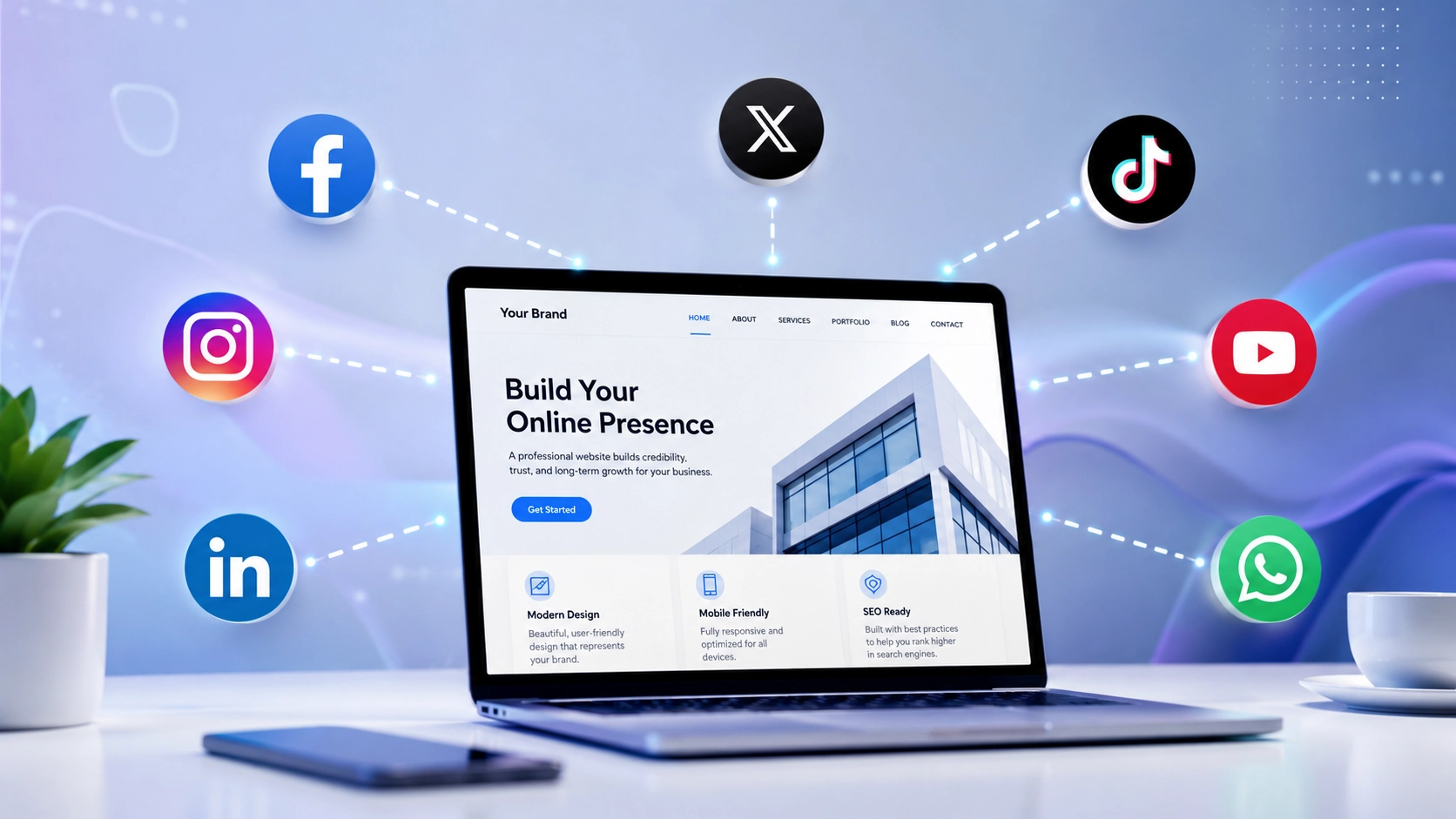
Think of your website as the hub and your social media as the spokes. The spokes bring people in. The hub turns them into customers.
Frequently asked questions
Can I run a business on social media alone?
You can start one, and some very small operations get by this way. But you’ll miss search traffic, lack full control, struggle to build deep trust, and remain invisible to AI-driven search. For sustainable growth, a website is essential.
Isn’t a website expensive compared to free social media?
A website is an investment rather than a cost, and it’s one you own permanently. Unlike social reach, which you effectively rent, a well-built site keeps working for you and typically pays for itself through the customers it brings in.
What if my customers are all on Instagram or Facebook?
Then meet them there and give them somewhere to go next. Use social media to reach them and your website to convert them. The two together outperform either one alone.
Will having a website help me appear in AI search results?
Yes. AI tools read and recommend websites, not social profiles. A clear, credible website is how you get found when customers ask AI for recommendations.
The Takeaways
Social media is a powerful tool, but it isn’t a substitute for a website. It’s rented ground, it misses search and AI-driven customers, and it can’t build trust or sell with the depth a website can. The smartest approach is to use both, with your website as the hub you own and control, and social media as the channels that bring people to it.
If you’d like a website that turns your social media audience into paying customers, our team has been helping UK businesses do exactly that since 2008. Start your project for a free, no-obligation chat, or get in touch to talk through what you need.