
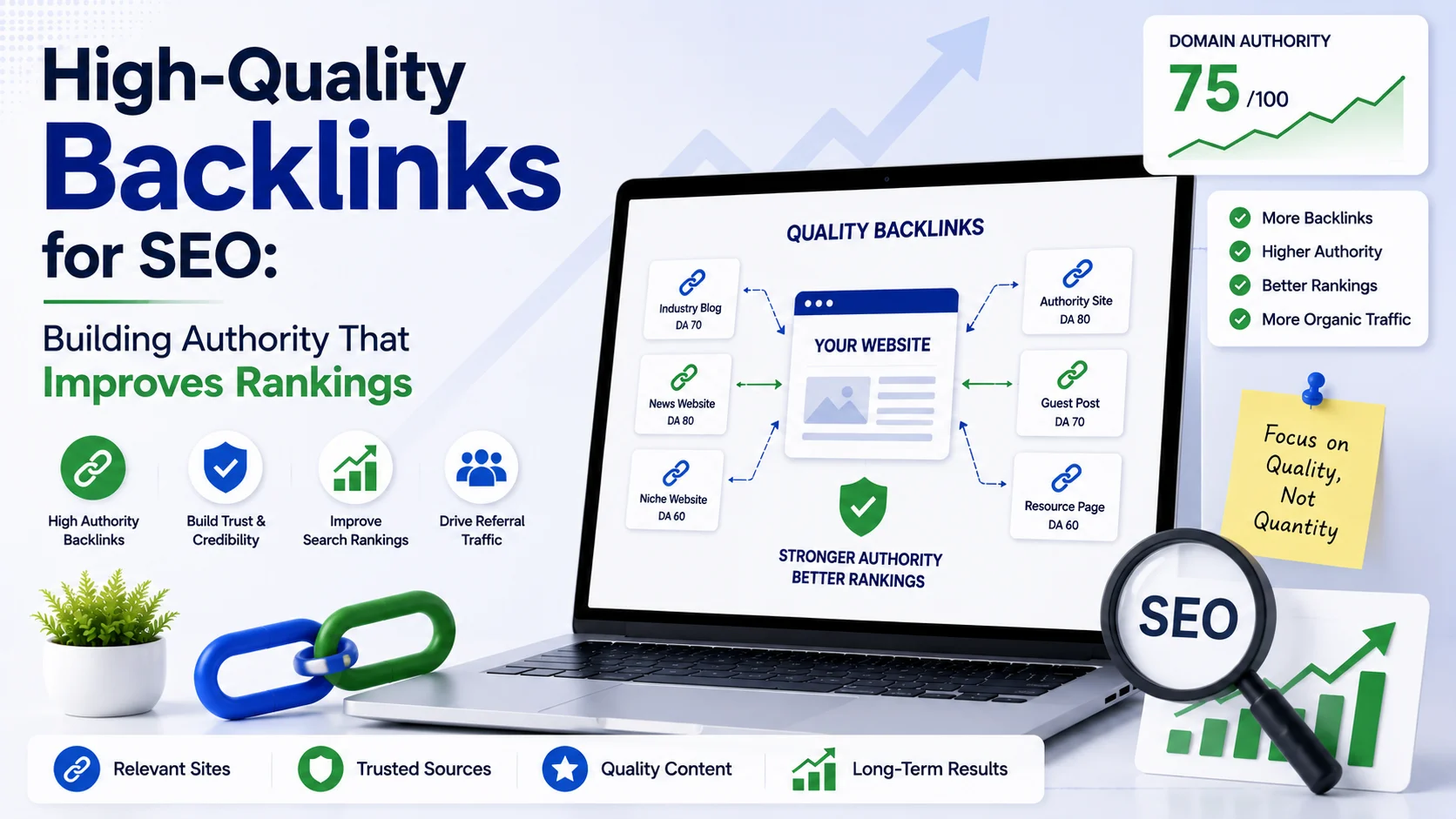
Backlinks are one of the most misunderstood elements of SEO. Many business owners know they matter. But they don’t understand why, which strategies actually work, or how to build them without wasting time or risking their site’s reputation.
The reality is simple: Google sees backlinks as votes of confidence. When another website links to yours, it’s telling Google “this content is valuable, credible and worth ranking.” The more quality votes you get, the higher you rank.
But not all backlinks are created equal. A link from a spammy, irrelevant website might hurt you more than help. A link from a relevant, authoritative site can dramatically improve your rankings and drive genuine traffic.
This guide explores what makes backlinks valuable, why they matter more than most people realise, and the proven strategies for building quality backlinks that actually improve your search rankings.
What Are Backlinks and Why Do They Matter
A backlink (also called an inbound link) is simply a link from one website to another. When website A links to website B, website B has gained a backlink.
Backlinks matter because they signal to Google that your content is valuable. Think of them as endorsements. If only you say your product is great, people are sceptical. If hundreds of customers publicly endorse your product, people believe you.
Google works the same way. Your own claims about how great your content is don’t carry weight. But when other websites link to you, you’re essentially getting independent endorsements. Google interprets this as “this site must have valuable content if others are linking to it.”
Backlinks affect two key SEO metrics:
Domain Authority (DA):
The overall strength and credibility of your entire website. Sites with more quality backlinks have higher domain authority. Higher domain authority helps all pages on your site rank better.
Page Authority:
The strength of individual pages. Pages with more quality backlinks linking directly to them rank higher for relevant keywords.
Both matter:
A site can have high domain authority but individual pages need backlinks too for those pages to rank well.
Quality vs Quantity: Why Not All Backlinks Are Equal
This is crucial: one quality backlink is worth far more than a hundred low-quality backlinks.
A backlink from a high-authority, relevant website signals to Google that your content is genuinely valuable. A backlink from a spammy, irrelevant website signals nothing positive and might actually hurt you.
Google has also refined its algorithm to detect and devalue manipulative link building. If you buy links from link farms, participate in link schemes or engage in other black-hat tactics, Google can penalise your site. Your rankings drop. In severe cases, your site can be removed from search results entirely.
What makes a backlink “quality”? Several factors:
Authority of the source:
Is the linking site itself trusted and authoritative? A link from Forbes matters more than a link from a random blog.
Relevance:
Is the linking site relevant to yours? A dental practice getting a link from a health blog makes sense. A link from an automotive parts site doesn’t.
Context:
Is the link placed naturally within relevant content? A link buried in an unrelated page has less value than a link in an article directly relevant to your content.
Anchor text:
The visible text of the link. “Click here” is weak. A descriptive phrase related to your target keyword is stronger.
Follow vs nofollow:
Dofollow links pass authority to your site. Nofollow links don’t. Most quality backlinks are dofollow.
Quality backlinks come from deliberate strategy and relationship building. They take time. But they deliver results that last.
The Cost of Poor Link Building
Before exploring good strategies, understand the risks of bad ones.
Bought links:
Paying for links violates Google’s guidelines. Yes, many sites buy links anyway and get away with it. But the risk of penalisation is real.
Link farms and article directories:
These sites exist solely to create backlinks. Google recognizes them and ignores or devalues their links.
Private blog networks (PBNs):
Networks of websites created solely to link to money sites. Google actively punishes these.
Link exchanges:
Trading links just to get links, with no genuine relevance, looks manipulative to Google.
Automated link generation:
Tools that automatically create backlinks are universally low quality and often violate guidelines.
Excessive link velocity:
Acquiring huge numbers of links suddenly looks unnatural to Google and can trigger penalties.
The pattern is clear: shortcuts and manipulative tactics backfire. Quality, natural link building works better and lasts longer.
Proven Strategies for Earning Quality Backlinks
Building genuine, quality backlinks requires strategy, effort and often relationship building. Here are proven approaches that work.
Create linkable assets:
The best backlinks come from content so valuable others naturally want to link to it. Research studies, comprehensive guides, original data, industry reports, infographics, tools and interactive content all attract links naturally.
Guest blogging:
Write valuable articles for relevant websites in your industry. Include links back to relevant content on your site. This builds relationships with publishers and earns quality backlinks.
Broken link building:
Find broken links on relevant sites pointing to outdated content, then reach out with your newer, better content as a replacement. Publishers benefit. You get a quality link.
Resource pages:
Many industry websites maintain resource pages linking to helpful tools and sites. Get your content included as a resource.
Public relations and media:
Earn media mentions that often include links. Being quoted in industry publications and news sites builds authority and backlinks.
Relationships with industry peers:
Connect with complementary businesses and content creators. Natural link exchanges and mutual linking happen when genuine relationships exist.
Reclamation:
Monitor your backlinks and find ones you lost. Reach out to ask for them back. Sometimes sites simply delete links by accident.
Scholarships and sponsorships:
Educational sites love linking to organisations offering scholarships or sponsorships. This is an ethical way to build links.
Each strategy requires effort and relationship building, but each produces genuine, sustainable results.
How to Audit Your Current Backlinks
Before building new links, understand your current backlink profile.
Use free tools like Google Search Console to see linking domains. For more detail, tools like Ahrefs’ Free Backlink Checker, Semrush, or Moz show your full backlink profile including domain authority of linking sites, anchor text, and link quality.
Analyse your current links:
- Which sites are linking to you?
- How many quality vs low-quality links do you have?
- What anchor text patterns do you see?
- Which of your pages get the most backlinks?
- Are you losing links you used to have?
This analysis reveals opportunities. If competitors have links you don’t, you can target similar opportunities. If you lost links recently, you can reach out and reclaim them.
The Role of Anchor Text
Anchor text (the visible text of a link) matters for SEO. “Click here” provides no context. “Best dental implant provider in London” tells Google exactly what the link is about.
Generic anchor text: “link,” “click here,” “website” Branded anchor text: “AdreamCreation,” “AdreamCreation web design” Partial match anchor text: “web design services” Exact match anchor text: “web design in London”
A natural backlink profile uses a mix of all types. Excessive exact match anchor text looks manipulative. A healthy mix of branded, branded plus keyword, partial match and generic anchor text looks natural.
Local Backlinks for Local Businesses
For service-based businesses serving specific areas, local backlinks matter.
Directories, chamber of commerce sites, local business associations, local news sites and local resource pages all provide valuable backlinks. They’re also more achievable than national backlinks because competition is lower.
Local backlinks specifically signal to Google that your business is important in your service area, which helps local search rankings.
At AdreamCreation
Backlinks are a core part of our digital marketing strategy. We don’t just help build links. We build the right links for your business.
Our approach focuses on quality over quantity. We identify which backlinks will actually help your specific goals, then strategically earn them through content creation, relationship building and outreach.
Our digital marketing services include strategic link building combined with content creation, technical SEO and on-page optimisation. Rather than chasing rankings for vanity keywords, we focus on building your authority in areas that actually drive qualified traffic and customers.
If your current link profile is weak, or if you’ve built links the wrong way and been penalised, we can help audit your profile, identify problems and develop a recovery strategy.
Frequently Asked Questions
How many backlinks do I need to rank?
There’s no magic number. More quality backlinks help, but quality matters far more than quantity. A site with 50 quality backlinks will outrank a site with 500 low-quality ones.
How long does it take to see results from backlinks?
Typically 4-8 weeks before you notice ranking improvements. More significant changes take 3-6 months. Backlink building is a long-term strategy, not a quick fix.
Are all dofollow links good?
Dofollow links pass authority, which is valuable. But even a dofollow link from a low-authority, irrelevant site has little value. Context and quality matter.
Should I buy backlinks?
No. Buying links violates Google guidelines and risks penalties. Quality links should be earned through valuable content and genuine relationships.
How do I know if a potential backlink is quality?
Check: Is the linking site relevant to mine? Does it have good domain authority? Is the link in contextually relevant content? Does it look natural? If yes to these, it’s probably quality.
What if I have a lot of low-quality backlinks?
Use Google Search Console’s Disavow tool to tell Google to ignore them. Focus on building quality links going forward. In severe cases of manipulation, you may need to request manual reconsideration from Google.
Can I recover from bad link building?
Usually yes. Stop the bad practices immediately. Disavow low-quality links. Build quality links going forward. Recovery takes time but is possible.
Building Authority That Lasts
Backlinks remain one of Google’s most important ranking factors. They signal authority, credibility and relevance. But only quality backlinks provide these signals.
The businesses dominating search results are those with strong backlink profiles built through valuable content, genuine relationships and strategic outreach. These businesses earn authority over time.
Short-term, manipulative tactics might provide quick gains but risk serious penalties. Quality backlink strategies take longer but build lasting authority that continues paying dividends.
If you’re ready to build a quality backlink profile and improve your search authority, get in touch with AdreamCreation. We’ll audit your current profile, identify opportunities, and develop a strategic link building campaign tailored to your business goals.